Saturday, June 23, 2012

So Remember When...


...I said we needed to set an end time zone to the migrations of Humans from Earth to Garnia World otherwise the Mistlanders would end up looking something like this-


When really it was my intention for them to be more like these guys-


Lower in Tech level than the contemporary Garnians, Frodians and Ming Liang, but not substantially lower, just poorer and less developed.

These richer guys have better equipment, and are obviously the leaders and their immediate retainers-


Some of them have horses too-


These pictures show the cultural diversity of the Mistlands, both mounted and on foot-


These pictures show professional warriors, some mounted-


But your hard-core, old school warrior goes to battle in a chariot, like his ancestors did-


Check out his grisly old school Celtic collection-


Then the poor guys get to show up with the same stuff they'd use to go hunting, because every able bodied man of the Clan gets to come out and play.


So, how do you like my visual representation of what the Mistlanders look like? I got all of the pictures from the Gripping Beast website, they Dark Ages Picts, Caledonians and Scots-Irish from their new SAGA line.

For what it's worth, this is about where the Garnians are military technology-wise-


And they are the preeminent military power in their part of the world. Sorry that one's in an unpainted state, I couldn't find a copy of them painted.

Friday, June 22, 2012

20 Questions- The Mistlands


What's the deal with my Cleric's religion?

A slight majority of Mistlanders are Celtic Christians, the rest are Celtic Pagans. The Christians are centered around monasteries, the Pagans have temples, shrines and holy wells & springs. Your Cleric's religion is probably based on what Clan he comes from, although there are some Pagan hold outs in Christian Clans and the occasional Pagan in a Christian Clan. The two religions get along better here than they ever did on Earth, probably due to the need to be allied against a common Evil foe. That doesn't necessarily mean they like each other, but there isn't any real hate either. It probably doesn't hurt that Celtic Christianity has a lot of Celtic Paganism left in it.

Where can I go to buy standard equipment?

That's tougher, this is a rough country, with no real cities to be found. If you find yourself in the Mistlands and you are not a native, you are probably screwed. If you are a native most stuff can only be gotten at your own Clan's villages or strongholds, or at those of allied Clans. Additionally, all of the weapons not made of wood are made of "Mistlander Steel" and cost twice as much as standard weapons. The mists "rot" normal steel in anything from a few days to a few weeks.

Where can I get custom platemail fitted for this monster I just befriended?

That's not going to happen. Mistlander steel is too hard to work and too expensive, it is mainly used for weapons, occasionally for armor for Clan Chiefs and War Chiefs or Heroes; but most Mistlanders fight wearing either no armor or just leather, everyone uses wooden shields, usually with a bronze boss, but, if they can afford them, with a Mistlander Steel boss as the most expensive part.

Who is the mightiest Wizard in the land?

Fíorcheann fiothnais nan clanna mac Mathghamhain, his studies into the arcane are legendary and he has protected the Mistlands from all manner of threats, from Giants to Humanoids to invasion from Garnia and Ming Liang. It is said he is over two hundred years old.

Who is the mightiest Warrior in the land?

Baothghalach Ó Dochartaigh, his personal prowess is impressive, but he is also a great leader of men; as a young warrior of the Ó Dochartaigh he took it upon himself to lead the other young men of his Clan in a cattle raid against the neighboring Mag Aonghusa Clan. Not only was the raid an astounding success, but in the battle that followed, he fought a rear guard action against the warriors of the Mag Aonghusa and slew both their War Chief and their Clan Chief's eldest son. He was fourteen years old and had only just begun weapons training. He is also a natural tactician. The war that followed had him leading his "Boys Troop" to victories in skirmish after skirmish, with few or no casualties. The Mag Aonghusa were utterly defeated and became tributary to the Ó Dochartaigh. Baothghalach has since traveled the Mistlands seeking out the best weapons masters and mastered their techniques; furthermore he has gathered followers from many Clans and has accepted broken men (Clanless) into his personal service. Furthermore, he seems to understand long term strategy. He has made great raids into both Garnia and Ming Liang successfully, and some say he is trying to become High King of the Mistlands, a position rarely held in it's history and rarely for very long or very successfully. Probably his greatest single achievement though, was destroying the nest of Baobhan Sidhe at Réimse na Ríthe.

Who is the richest person in the land?
Baothghalach Ó Dochartaigh although Mistlanders measure wealth a little differently than most countries do, they measure it in Cattle and Fighting Men and he is well ahead of most Clan Chiefs in either one or both. He also has the love of the people, because he shares the wealth of his raids rather than hoarding it, whether it's cattle, coin or jewels or other valuables, everyone, whether they're under his protection or not, as long as they're not an enemy, gets something from him when he passes by, and he has a great, and honest, network of distributors working under him. People under his protection receive coins and exotic goods from foreign lands and no on goes hungry.

Where can we go for some magical healing?

In this, you are lucky. The Mistlands has a plethora of magical springs, many of which have healing properties. Otherwise, every village has a Priest, either Pagan or Christian that might be able to help, depending on your status vis-a-vis their Clan. Monasteries will certainly have someone that can help, but are often reluctant to heal non-Christians, at least not without either a great contribution of some form of wealth or favor to the monastery or a conversion to Christianity. Most Clan Strongholds will have a Priest, again either Christian or Pagan, that will be able to heal you, but then you need to have the favor of the Clan. There are no Druidic colleges present in the Mistlands, the Pagan Priesthood either learn from their predecessor or leave to study elsewhere, usually at Dun Math on the Steppes, the oldest "Druidic" college in Garnia world.

Where can we go to get cures for the following conditions: Poison, Disease, Curse, Level Drain, Lycanthropy, Polymorph, Alignment Change, Death, Undeath?

Pretty much the same answer as above, with a few exceptions. With Poison there might be an anti-venom that a local herbalist might know, and since Poison is a cowards way to kill a foe, it really doesn't matter what your status with the clan is, anyone will try and help, even an enemy; because he doesn't want to be blamed for the foul act. Alignment Change, no one is going to help you turn back to Evil if that's where you started. The only cure for Undeath is the True Death, may you rest in peace.

Is there a magic guild my MU belongs to or that I can join in order to get more spells?

No, nothing so organized here. If a child is recognized as having the potential, he or she will be taken on as an apprentice to a Master Wizard in the Clan.

Where can I find an Alchemist, Sage or other Expert NPC?

There are not a lot of them in the Mistlands, but the Monasteries keep good records and have some trained historians. Every Clan Stronghold will have at least one Seanchai. These are a largely non-literate people, so they remember everything through songs and poetry; it's also how they entertain themselves most nights. So, Sages, of a sort, kind of common, in a Bardic way, less common at the monasteries. Not many Alchemists to speak of, maybe among the great Wizards, but alchemy is really for richer, more developed lands. They don't have too many roads here. Other experts? Depends on what you're looking for. Plenty of herbalists and brewers and leather workers, not so many siege engineers.

Where can I hire Mercenaries?

That really depends, you can pick up broken men lurking about and form your own company, but if you are a foreigner, or not seen as strong enough, you'll probably face a mutiny eventually and discipline may be tough since some of these guys might have come from Clans that were feuding. What's worse with broken men is that they might have been cast out of their Clan for a reason, and not be broken because they have no kin. The other route to take is to boldly "Make an Alliance" with a Clan Chief, and use his army. This can backfire too, because they might not like following the orders of a foreigner, or the Chief might decide that too many of his men have been lost in your cause and just leave. Both the Garnians and the Ming Liang have used this tactic to keep the Mistlanders fighting amongst themselves for centuries, it cuts down on the raiding.

Is there any place on the map where swords are illegal, magic is outlawed or any other notable hassles from Johnny Law?

In the Mistlands every Clan is it's own Kingdom and so is every Monastery, so the rules vary from place to place, but in general it's considered poor manners to keep anything bigger than an eating knife on your person when you enter a private house. Hospitality means a lot here, if they let you in, you'll make it out alive. For centuries the Christians argued about the use of Magic, their own spells were clearly miracles from God, but Wizard's spells might be an Evil thing. Ultimately it was decided to follow the old Roman law and just condemn Maleficium (Magic used for Evil purpose), although some more conservative Priests and Monks still are uncertain about this decision.

Which way to the nearest Tavern?

This is a good news/bad news situation. Mostly, there aren't any taverns in the entire Mistlands, but pretty much every single village has an alehouse. This is literally someone's house where you can come in for some ale and it's usually cheap. Quality and welcome vary. The other thing about the Mistlands is that they are alone in all the lands of the Celts for having discovered distilling, so sometimes you can get Uisge Beatha (Whisky) which is usually expensive and mostly only available in Clan Strongholds. It is a key trade item for the Mistlands at their border trading posts, along with Cattle, Copper, Tin, Tartan Plaid Fabric and Wool. They also produce significant amounts of Silver, but prefer to keep it, and never trade Mistlander Steel.

What monsters are terrorizing the countryside sufficiently that if I kill them I will become famous?

There is always some odd hellish beast crawling up out of the great rift. Giants and their kin are all over the Northlands along with tribes of Humanoids that serve them. The mists themselves seem to call to all manner of Unseelie Sidhe, sometimes for a few minutes, sometimes they set up to stay.

Are there any wars brewing I could go fight?

Always. Mistlanders are a quarrelsome lot, and hold grudges for centuries.

How about gladiatorial arenas complete with hard-won glory and fabulous cash prizes?

Not so much Gladiatorial games, but Sword Fighting with Wooden Wasters, Bare-Knuckle Boxing, Wrestling, many different types of feats of strength, Archery and other martial contests take place at Clan gatherings where Glory and prizes can be won. Of course you can also win for song and poetry, or dancing if that's your thing. Drinking contests are popular too.

Are there any secret societies with sinister agendas I could join and/or fight?

It wouldn't be much of a secret if I went and told everyone on an open blog post, now would it? Seriously, this the kind of answer that I prefer to develop in actual play, rather than plan ahead and then maybe never use. That said, the only possible option I could think of would be smugglers moving Mistlander Steel out of the country.

What is there to eat around here?

That really depends on where you are and who you are, but beef, mutton, pork, chicken and all manner of wild game are on the menu, as are fresh water fish. Dairy products, they are a milk drinking, butter loving, cheese eating people. Oats, barley, rye, apples, plums, cabbages, onions, carrots, turnips, (potatoes), various herbs and seasonal greens. Think snout to tail, nothing wasted, cooking, mostly boiled in a pot or fried in a pan. Spit roasted food is an extravagance for the wealthy. Beef or game are the preferred foods of the warrior aristocracy.

Any legendary lost treasures I could be looking for?

The Cave of Céadach Ó Baoighill is said to be full of gold and ancient Sidhe treasures. Céadach Ó Baoighill led his band of men to the nest of Unseelie Sidhe and destroyed them all, but the dying curse of the last one made them all forget the location of the cave, which had taken them the better part of a year to find when there were active Unseelie Sidhe operating out of it. Now, centuries later, it's a legend, just "Someplace in the eastern Mistlands".

Where is the nearest Dragon or other Monster with Type H treasure?

Sleeping in the Great Rift, waking the Dragon would be a fool's quest.

Bonus descriptor- these guys wear kilts made of Tartan Plaid although there is no universal Clan tartan for any Clan, it's pretty much whatever your wife or mother or grandmother weaves for you.


Thursday, June 21, 2012

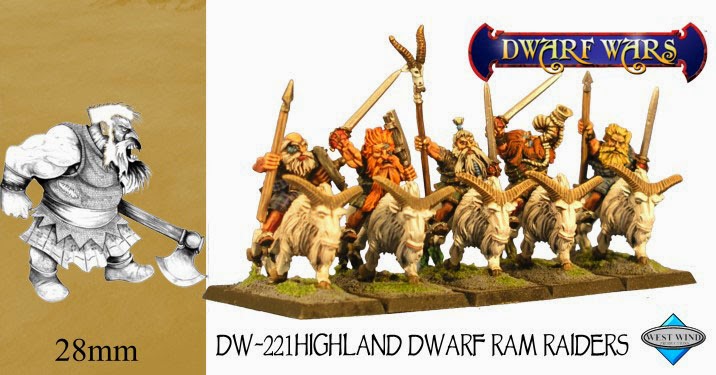
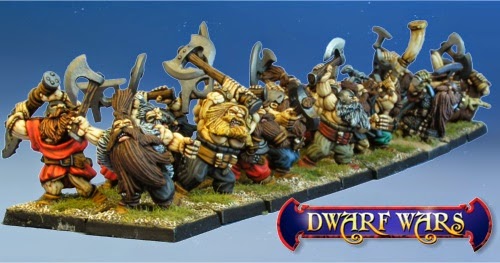
So I got to thinking about Dwarves.


Dwarves as they pertain to Garnia World anyway. Their enormous mountain kingdom is slowly being eaten away by various species of humanoids and other foul creatures, so they have inevitably found their way into the service of the young human kingdoms that have sprouted up around them, party because they were refugees and partly because they are still holding a grudge against the Sidhe for sealing off their home plane from them forever.

I kind of ranted a bit the other day on my other blog about how all Dwarves have become Scottish and it annoyed me, but then I thought it over and, hey, the Mistlands are a mountainous region full of Gaelic speaking Clansmen, essentially they are Scottish Highlanders. Dwarves are naturals for mountainous regions, and refugees from their own kingdoms that are willing to adopt the customs of the humans they live amongst, for the most part. So why shouldn't I add these guys to the growing forces of Highlander miniatures that I have? They'd pretty much fit right in, am I right?


Then I got to thinking about the Dwaves that would have been early joiners of the Celts, maybe even when they were still building Crannogs and Brochs out on the Steppe, mostly because I have a lot of Ancient Celt miniatures, and I saw them on the West Wind Dwarf Wars site along with the Highlanders, so what the hell, these guys can join too right? Plus I like to play early period Garnia sometimes.


Then I remembered that the other side of Khazarak is Roman, some of them must have gone that way, Dwarf Wars to the rescue again, and Black Tree Designs.Considering the Black Orc Games Simians, the Romans are going to have some AWESOME legions.


Here are the Simians- I already have a couple and can say they are quality pieces.


Now this is what the "modern" Garnian Dwarven Guard looks like in my head, because despite it being 2012 there like it is here, they have a roughly 12-13th century level of technology in Garnia, magic will do that I suppose.


This is about what Khazarak usually fields in it's endless wars against the forces of Darkness-


And a couple of Hero/Leader types for Khazarak-


Potentially members of the Altan Ordu?


I'll have to think on this one a bit, but the presence of appropriate miniatures for a fantasy campaign certainly makes it a more viable option.

Must Decide End Date for Human Migrations


I have been thinking pretty hard on this one and we need an end date for when the last Humans make it to Garnia World. I got to thinking on this for two reasons. The Chronomancer's gate was immediately destroyed after a single, large use. Gunpowder. Either it doesn't work because of DM fiat, or the last people through any gates have got to pre-date gunpowder which is already a problem for some established areas, like the Iroquois, Mongols and Aztecs. Probably a problem for the Byzantines. Possibly a problem for the Chinese, and any later period Celtic transfers will need an end date.

I got to thinking about this because I was looking for Scottish Highlander miniatures to represent the Mistlanders and came across these guys.


Pretty cool eh? almost perfect, except the guy on the far right has two pistols. So, two questions I guess when do the last people come from Earth? Does gunpowder work on Garnia World or does magic change physics and chemistry?

On the one hand I can see gunpowder weapons not destroying a fantasy campaign, plenty of games have them. They are expensive, slow to reload, prone to misfires under sub-optimal conditions, etc. On the other hand, we've never had them there before and it puts certain areas at a much lower tech level than others, which was always true, but now it's even worse. Stone age Aztecs versus a gunpowder tech equipped Mongol horde? Stone age Iroquois against these guys? Crusader era Knights against these guys?

Sunday, June 17, 2012

The Terracotta Golems of Ming Liang


Well, it appears that some other people are doing some fine Garnia work for me. Joseph Bloch over at the Greyhawk Grognard blog just came up with this, serendipitously as I was doing some serious thinking about the Empire of Ming Liang. I changed some of the wording to match the Garnia setting rather than Greyhawk, but left it otherwise untouched.


Terracotta Golem
Number
1 (or 20d10)
Morale
n/a
Hit Dice
3d12
Armor Class
7
Move
90’/min.
Magic Resistance
D
No. of Attacks
1
Damage
Per weapon type +2
Defenses
See below
Attacks
Fear 30’ radius
Weaknesses
Blunt weapons do maximum damage
Size
M
Intelligence
0
Alignment
Neutral
Treasure Type
None
Treasure Value
n/a
Magical Treasure
None
X.P. Value
205 + 5/h.p.

General: Terracotta Golems are found in Eastern Garnia, specifically in the Celestial Imperium of Ming Liang. They are classified as Greater Golems. The secret of their construction has not made its way to other lands of Garnia, although it is possible that some expatriate Ming Liangese have brought the art with them. Only Mages who have learned the specific art of Terracotta Golem construction can undertake the process. It is rumored that manuals of terracotta golem creation exist in Ming Liang, but in their absence, creation of a Terracotta Golem requires the following:
  • 10,000 g.p. for materials
  • Casting a limited wish spell
  • Casting a polymorph any object spell
  • Casting a geas spell
  • Casting a fear spell

Terracotta Golems are able to understand commands of limited complexity and length, and will always obey the instructions of its creator. If its creator is slain, it will obey the last instructions given to it. In Ming Liang, vast numbers of such Golems are often used to protect the tombs of emperors, and all are explicitly instructed to protect and serve the Emperor. Thus, if the dead emperor was brought back to life as an undead creature, such Golems would be compelled to obey him, even though he was not their direct creator. They are sometimes created for more mundane duties, as any other Golem.

Combat: Terracotta Golems attack with their weapons (which can be of any type appropriate for a Warrior), with an effective strength of 18 (giving them a bonus of +1 bonus “to hit” and a +2 bonus to damage). If unarmed, they do 2d6+2 h.p. of damage with their fists. All radiate an aura of fear in a 30’ radius (which functions as per the spell). They are only harmed by enchanted weapons, but if struck by a magical blunt weapon (such as a mace, club, etc.) with a +2 or greater enchantment, the weapon will inflict maximum damage upon the Golem. As all Golems, they are completely immune to mind-affecting magic such as sleep, charm, hypnosis, etc. Electrical, fire, and cold based attacks do them no harm.

Appearance: Terracotta Golems are formed in the shape of human warriors, painted in realistic colors. Despite this, there is no mistaking them for actual living persons except at extreme range. Even those found in great numbers will all possess individualized features and will vary slightly in appearance, height, dress, skin tone, etc.

This creature is hereby designated as Open Game Content under the Open Game License. Copyright © Joseph Bloch, all rights reserved.


Sunday, June 10, 2012

Celtic Monster- Dullahan


I snagged this from Lord Gwydion at the What a Horrible Night to have a Curse... blog, renamed it and changed the text significantly.


Dullahan


AC: 5 (15)
HD: 6** 
Move: 120 (40) (or as mount)
Attacks: 1 Bone Whip
Damage: 1d8 Save vs Spells on a hit or become Blind 
No. Appearing: 1 (1-4)
Save As: F6
Morale: 10 
Treasure Type: A (U)
Alignment: Chaotic
XP: 725

The Dullahan,
 is a type of Unseelie fairie. It is headless, usually seen riding a black horse and carrying his or her head under one arm. The head's eyes are massive and constantly dart about like flies, while the mouth is constantly in a hideous grin that touches both sides of the head. The flesh of the head is said to have the color and consistency of moldy cheese. The Dullahan's whip is actually a human corpse's spine, and the wagons they sometimes use are made of similarly funereal objects (e.g. candles in skulls to light the way, the spokes of the wheels made from thigh bones, the wagon's covering made from a worm-chewn pall). When the Dullahan stops riding, it is where a person is due to die. The Dullahan calls out their name, at which point they immediately perish (Finger of Death).

There is no way to bar the road against a Dullahan—all locks and gates open on their own when it approaches (Knock). Also, they do not appreciate being watched while on their errands, throwing a basin of blood on those who dare to do so (often a mark that they are among the next to die), or even lashing out the watchers' eyes with their whips (Cause Blindness). Nonetheless, they are frightened of gold, and even a single gold pin can drive a Dullahan away. but can also use the following spells: Knock, Cause Fear (at will), Cause Blindness (once per turn), Finger of Death (once per day).  As Unseelie creatures, Dullahan are immune to sleepcharm and hold magic.  They can be Turned as Vampires.

Thursday, June 7, 2012

20 answers from Frodia

cant fit my comments in due to shitty character limits, so after 3 or 4 attempts at posting it in pieces, here's a new post instead.


I'll take a stab at it:

All these off the top of my head. I expect many will lead to areas in need of development, hence the impetus for your post...
<time passes>
... ok, so I was gonna tackle it on a world as a whole basis, but then I re-read your post and decided that you are correct that a country by country approach is preferable. Basically we are writing a Gazetteer with these I guess?

As Frodia's founder and Champion I guess I'll start there. This, naturally, is just how I see Frodia in relation to GW. Most of this will probably be wrong, and I’ll have simply forgotten that we changed it. Strap in, let’s roll!

1. What is the deal with my cleric's religion?
This brings up the first sub point - the GW pantheon. I think this needs to be its own development project. Most of the gods will be aspects of the light and dark I guess? There should be significant overlap among the human population I'd guess? Many demi human races here too - they have racial deities?

Most spell casters in Frodia revere mana itself (the invisible mystic force that allows magic to function) and they draw their power from it for their ability. In D&D game terms, clerics "pray" to mana itself for their spells, while wizards memorize spells from books and sorcerers free-form manipulate the raw energy - the key is that all 3 are doing the same thing - conditioning their brains to allow for the manipulation of mana energy into magic spells. The exact method (rhythmic prayer, deep study and memorization or intuitive alignment) vary from class to class, and the types of magic they are able to manifest might be different, but the process is basically the same.

Some minor sects revere Frodal himself (leader of the rebellion against Garnia and the founder/first ruler of Frodia) as a god, though they, too, focus and harness mana similarly to all other casters.

2. Where can we go to buy standard equipment?
Just about anywhere. The Frodian economy is strong. Every settlement of hamlet size on up will have at least a general store that will stock most goods. Prices may vary by location. The cities will have thriving markets and traders of all sorts. The roads are generally safe and patrolled, and inter-city and international trade is common.

3. Where can we go to get platemail custom fitted for this monster I just befriended?
This one might be a bit trickier. I’m guessing the capital would have an armouror up for the task, but he probably is busy working for the King…maybe there’s something the King needs doing that could result in a boon?

4. Who is the mightiest wizard in the land?
I don’t know the naming customs of all these places yet (linguistics is Will’s bag) but I can tell you that he is the Headmaster of the Royal Academy of Magick, the largest university of spellcraft on Garnia (as far as humans know). Located in the capital city of Cothe.

5. Who is the greatest warrior in the land?
No names, and frankly, I’m not sure on this one. I’d expect the leader of the King’s vanguard to be pretty adept. General of the armies? It is just as likely to be a passing hero NPC (or PC) frankly. Most warriors don’t last long in battles with most wizards in these parts. The country of course fields infantry militia and the like in times of war, but the specially trained battle mage battalions do most of the heavy lifting…

6. Who is the richest person in the land?
The King. I’m not sure he’s called King, he probably has a more wizardy title, and he is always a Spellcaster (though his kingly administrative duties usually preclude him from the focus and clarity of mind to rival the top spell casters for raw power). Frodia is a feudal magocracy. Most noble houses are casters. The few noble houses that arose from non-spell casting lines are generally looked down upon slightly in noble society. There is a definite prejudice against those without magical affinity at all levels of society in Frodia.  There are some rather wealthy merchants and smugglers along the coast though…

7. Where can we go to get some magical healing?
Swing a dead cat and you’re bound to hit someone…

8. Where can we get cures for the nastier bits?
Medium sized towns should be able to scare up enough power for most of the simpler stuff (poison, disease, curse) large cities or secretive powerful hermit casters for the more potent stuff. Death is a different issue.  Resurrection is a highly controlled magic in the wake of the terror that was the Necromancer. Anyone seeking resurrection must apply for a resurrection permit, which is granted on a case-by-case basis. Non-sanctioned resurrection is a crime punishable by death and magical entombment which will preclude all revival methods, for both those resurrected, those performing the act, and those commissioning or abetting the act.

9. Is there a magic guild?
You better believe it. Frodia is a highly literate land ruled by a committee. You bet there’s red-tape. All spell casters are required to be members of a guild (there are many, not only by class, but by ethos, type of magic, etc…all are basically the same). Many guilds disagree on many things, leading to a certain chaos…one thing is certain though – keep SOME guild card handy if you cast a spell. Unlicensed magics can result in heavy fines and/or forced labor imprisonment.

10. Where can I find a sage/alchemist, etc.
Magic related trades will be found everywhere…typically settlement size correlates to ability level of expert. Other experts will be in bigger cities only.

11. Mercs?
Sure, mercs. Again, medium sized settlements and up will usually provide a recruiting ground for these folks.

12. Johnny Law:
As I mentioned, foreign spell casters need to register and join guilds. Unauthorized magic use is a crime in all of Frodia. Most folks wear swords – the land is patrolled and settled, but its still a fantasy game world – there’s some crazy shit out there!

13. taverns are commonplace.

14. Legendary critters?
I’m not Dming here so I don’t know.* You name it, there’s probably a place to find it…there is a fabled far off land of dinosaurs

*by which I mean this large overview has nothing like that. If I ran a game in Frodia I’d populate it like this, so just a question that doesn’t translate as well for our purposes…

15. Are there any wars brewing?
IIRC we are in a bit of a Pax Garnia period? I guess we should stir some shit up somewhere…is Garnia still fighting the Ming Liang?

16. How about gladiatorial arenas and whatnot?
Large cities for sure. Magical combat too.

17. Secret societies.
Probably. I guess this is a good development opportunity area…goes back to the guilds as well…

18. What is there to eat?
Typical fantasy world fare. Land is good, fertile and plentiful. Trade is abundant. Standard of living is fairly high.

19&20. Legendary lost treasures/ nearest dragon (or other rich monster) – see #14.

20 Questions again.


A little over a year ago Jeff Rients asked these twenty questions on his blog here, I was thinking we might want to use this as a basis and start answering the twenty questions about each country in Garnia World. Obviously, when you are dealing with countries a question like "Where is the nearest tavern?" isn't relevant, but we might want to include a matrix of political attitudes between countries, kind of like the old Racial Preferences table from the 1st edition PH.  Assume that all of the questions apply to the campaign at present.


  • What is the deal with my cleric's religion?
  • Where can we go to buy standard equipment?
  • Where can we go to get platemail custom fitted for this monster I just befriended?
  • Who is the mightiest wizard in the land?
  • Who is the greatest warrior in the land?
  • Who is the richest person in the land?
  • Where can we go to get some magical healing?
  • Where can we go to get cures for the following conditions: poison, disease, curse, level drain, lycanthropy, polymorph, alignment change, death, undeath?
  • Is there a magic guild my MU belongs to or that I can join in order to get more spells?
  • Where can I find an alchemist, sage or other expert NPC?
  • Where can I hire mercenaries?
  • Is there any place on the map where swords are illegal, magic is outlawed or any other notable hassles from Johnny Law?
  • Which way to the nearest tavern?
  • What monsters are terrorizing the countryside sufficiently that if I kill them I will become famous?
  • Are there any wars brewing I could go fight?
  • How about gladiatorial arenas complete with hard-won glory and fabulous cash prizes?
  • Are there any secret societies with sinister agendas I could join and/or fight?
  • What is there to eat around here?
  • Any legendary lost treasures I could be looking for?
  • Where is the nearest dragon or other monster with Type H treasure?

Monday, June 4, 2012

Garnia- Celts, Romans and Earth's Magic Supply


I was reading through some of the earlier stuff that I was writing about the initial Celtic migration specifically and how I came up with a reasonable estimate that they would have a population of roughly 37 million, all the steppe-taiga-tundra could easily contain, within 100 years, if they had a conservative 120,000 original settlers. That happened and the tribes set to fighting amongst themselves a bit and looking for new lands to settle. The Sidhe empire to the south was promising territory, but they were epic sorcerers, even compared to the raw power of the Druids.

It was the Sidhe warriors that got itchy about Human incursions into their "forbidden zones" that started the war that brought their empire down. The tribes of the eastern steppes were attacked and culled like an over population of deer, or killed by these troops with the mercy they'd have shown a band of Goblins, their villages were burned and their people were slaughtered, this was around 150 AD. By 170 AD or 230 years after the migration, (What are we going to use as an abbreviation for the Garnian calender dates?) Gwaryn is declared High-King of all the tribes of man and leads an invasion force into the Sidhe empire. The Celts own potent magic, use of both chariots and cavalry, as well as iron weapons and their great numbers*. The Sidhe empire was swept before their tide of destruction, but it was vast enough that it took time to do, the campaign lasted for more than twenty years, and in the end, the southern 1/3rd of their empire was not as totally devastated as the northern 2/3rds. The campaign took on a less genocidal tone over time too, it was discovered that the Sidhe became weak and could not do magic if you put an iron collar on them, so many were enslaved.

Now the Romans, if the Celts were brought to Garnia by the forces of Darkness because they loved to fight, took heads as trophies, and practiced human sacrifice. I suppose when the Celts started turning all namby-pamby good on the Sidhe plane, because it emanates Good, they must have figured the people who scared the hell out of the Celts were a good bet for creating a more Evil empire in their place. They oppressed their women more, they kept slaves on a grand scale and had regular mass human sacrifice as entertainment for the masses. Plus they were militarily unstoppable, at least by the Celt and everyone else they'd met in the Mediterranean region. With the Sidhe out of the way, only the Dwarves really had to go, and they were already under serious pressure, so they took advantage and brought en masse the entire population that would have died and replaced them with simulacra, provided them with an intelligent and strong slave race that already spoke and read Latin and Greek, the Apes, put them in a place that was exactly like their home, down to the olive trees and vineyards, with pre-prepared housing and other needs taken from Earth. It was a huge undertaking, probably draining the power of several major Evil players for decades, perhaps centuries. I do need to figure out rough population estimates for this entire group of people that was supposed to have died, so I can expand their population over time and build their empire, they won't be taking Goblin Aegyptus overnight.

Now we still have to figure out when Earth's Mana battery dries up, how many times can the Dwarves or the Elves use gates to and from Earth, I assume it uses Earth's energy to open the portal and send them through from the Earth side to Garnia, and Garnia's energy to open to Earth. Garnia has energy to spare, it regenerates, Earth doesn't. So maybe the Mongols, or the Aztecs are good examples of cultures on Earth that Evil says"Finally, somebody we can really work with" and drags their asses through, but I am thinking the Byzantine Greeks might have been a rescue, or a spell someone figured out from some dusty old tome. The Iroquois could go either way honestly. The pre-Muslim Arabs and the Hindus? The Kung San? The Han Chinese, the Japanese? The Romany, Kushites and Basques? Obviously the Neanderthals were a Sidhe rescue program. The Saxons got here via forces of Evil because they were invading Britain, and actively at war with the Celts; it seemed like a no-brainer to the bad guys, it just didn't work out as planned.

This also makes a big difference because the Celts control and understand how to use a Sidhe portal to Earth, and they taught their compatriot Druids on earth how to use them too; this is essential for the multiple crossings plan. So I need some input on when the last Celts can freely leave Earth for Garnia, what makes sense? Ancient times? Pre-Christian times? Medieval Celts? Renaissance/Elizabethan Period? Early modern, runaway Jacobites could be fun, eh? 19th Century and the Potato Famine (1845-1852 in Ireland killed roughly 1million people and caused a further roughly 1 million to emigrate, about 25% of the population; the same famine struck the Scottish Highlands and Islands between 1846-1857, it's called the Highland Potato Famine there, and, while the death toll was lower, 1.7 million people were forced to emigrate** and many others suffered from severe malnutrition due to the meager rations the British government allowed them (24 oz grain/man/day 12/woman/day 8/child/day). This mass death and/or migration destroyed what was left of Gaelic culture, the English speaking areas of these countries were unaffected or taken care of by the government.

Yes, I understand that both Scotland and Ireland have Gaelic speaking regions, but there are damned few monoglot Gaelic speakers in the world anymore. Same goes for Wales, which has a thriving Welsh language, they successfully tied their national tongue to their quest to be recognized as a separate people from the English, but they all still speak English too. Manx is dead, although they're trying to revive it. Breton is on it's way out, the French have been trying to kill it with all the vigor that the English have been trying to kill their Celtic languages for just about as long, centuries. The last Cornish speaker died in the 1700's if I recall correctly. The sad fact of the matter is I think there are more people speaking Klingon fluently that there are any form of Gaelic.


*Roughly 10% of all Celts were warrior aristocrats, perhaps a further third had at least some training at arms and were fit for battle at any given time, the initial invasion force would have had 3.7 million professional full-time warriors and another 11.1 million lower born spearmen/slinger types. Plus the Druid-Priests, Wizards and Bards, maybe 1/2 a million or more of them.

**Including, in all likelihood, my great-great grandparents.  

Saturday, June 2, 2012

More Inspirational Pictures


These are the warriors that would have been brought to Garnia, I don't see them adapting their traditional methods of warfare or their culture too much, so these pictures show pretty much the kind of armies that would have poured into the Sidhe empire off of the northern steppes when the war between Elf and Man started, and they probably wouldn't have looked too much different a couple generations later when it was all over. I suspect the modern Garnians and their related subcultures have changed significantly in the intervening centuries to greater or lesser degrees, but this is their starting point.


In any pictures with Romans, just pretend they're Elves; same with the severed heads.